Bone. Two situations, two programmes.
Thinning bone is not something you wait out.
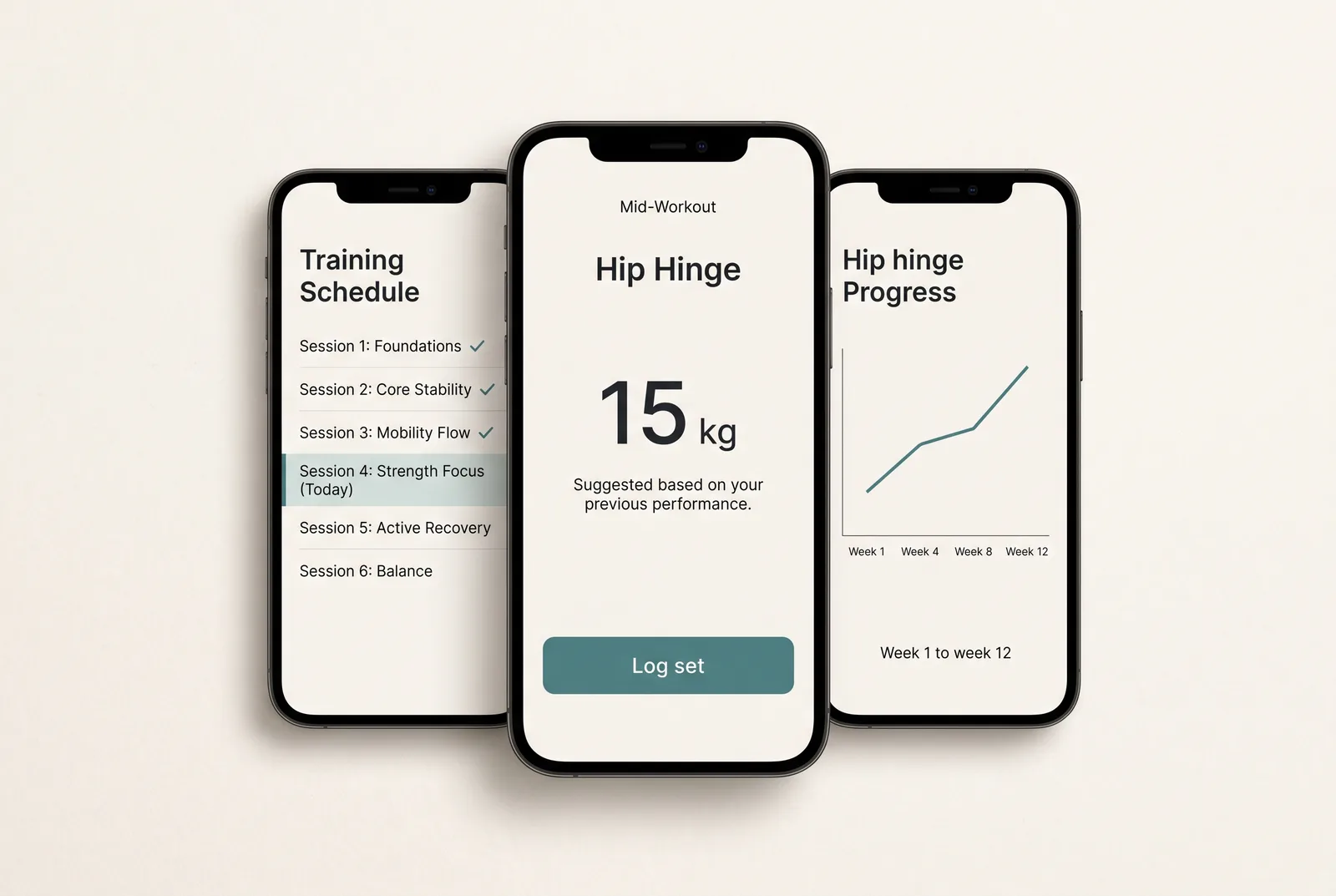
You get a scan, a number, a leaflet about calcium, and a review in a year. Nobody hands you Tuesday: what to do this week, in your own house, with the body you have got today.
Bone answers to load. It is living tissue that responds to what you ask of it, which is why the plan for a thinning spine is not rest.
So there are two programmes here, and which one is yours depends on one thing: whether your spine has already broken.
Written and signed by one physical therapist, a DPT with 22 years in practice. Screened before anything opens, and some answers close it.
- Two programmes, one for each situation
- One payment each
- No subscription unless you pick one
- No supplements, no kit habit
Two situations, and they are not the same
Your scan came back low, and nothing has broken
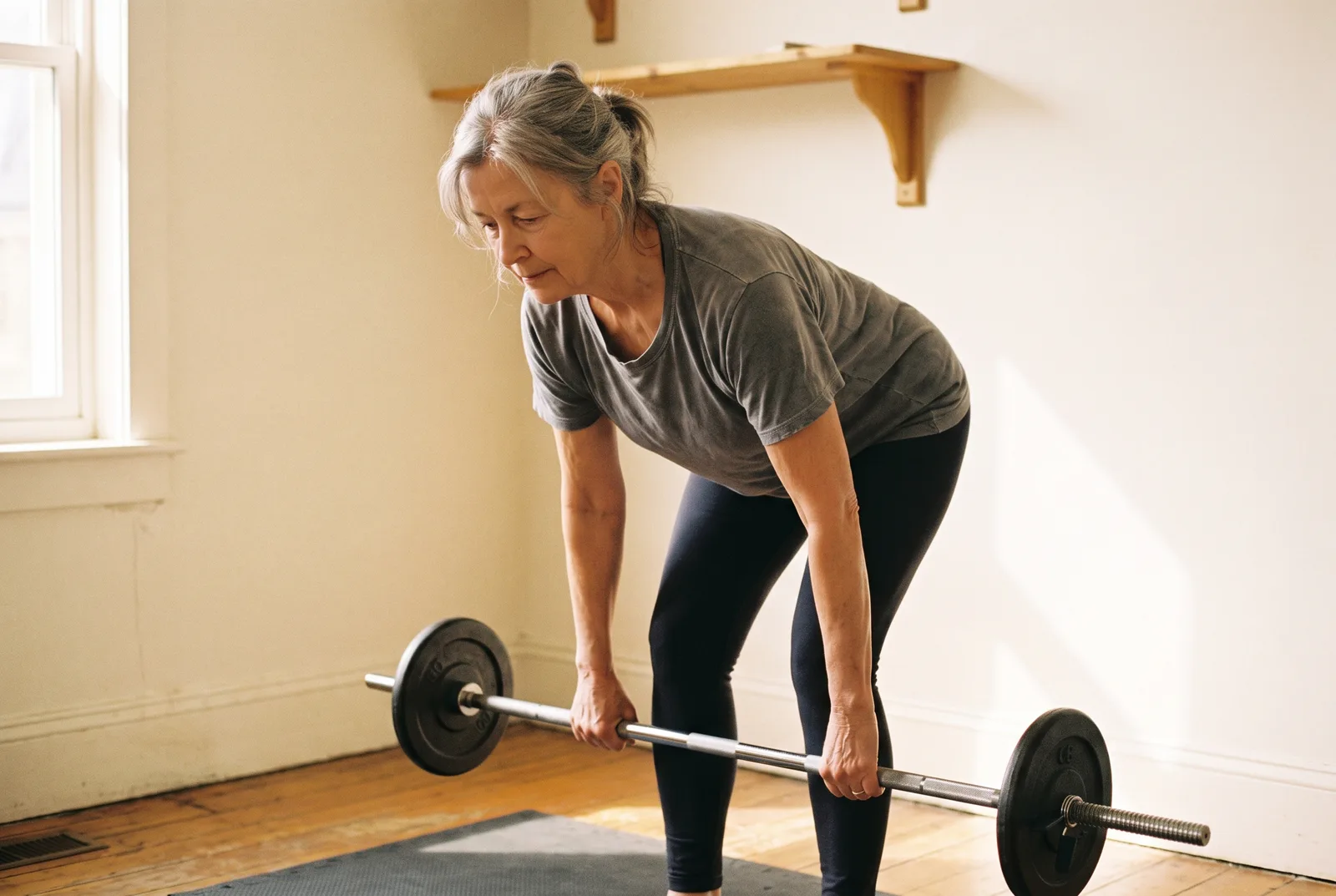
The Threshold Protocol. Twelve weeks of loading, twice a week, about thirty five minutes. The weight goes up when your own logbook says it should and not before.
Load is the signal bone responds to, and the point of twelve weeks is to give it that signal often enough to matter.
Your spine has already fractured, or your score is too low to load
The Upright Protocol. Twelve weeks with no barbell and nothing resting on top of your spine. It works on the muscles that hold you upright, and on not going down.
This is not the smaller version of the other one. It is a different answer to a different problem, and a spine that has already broken is what it was written for.
You are not sure which one
Then do not guess, and do not buy first and find out after. The questions that decide it are free and they come before any payment.
What this business will not do
It will not sell you the wrong one. The questions that open a programme can also close it, and if the answers close the one you were about to buy, you are told before your card is touched, not after.
If the answers close it after you have paid, you get every cent back, or the programme written for those answers instead. There is no time limit on asking.
Threshold
The Threshold Protocol
A scan came back saying your bones are thinning, you did not see it coming, and nobody has told you what to do about it beyond calcium and being careful.
Two sessions a week, about 35 minutes, for twelve weeks.
Not this one if a bone in your spine has already broken, or your score is minus three or lower. The Upright Protocol is written for that.
Upright
The Upright Protocol
Your spine has already fractured, or your score is too low to load safely, and every person who has mentioned it has told you to be careful.
Two sessions a week, about 25 minutes, for twelve weeks.
Not this one if your spine is sound and nothing has fractured. The Threshold Protocol will take you further.
Still not sure which is yours? Answer a few questions and you get the version of this written for the answers you gave, including the one set of answers that ends with us telling you not to buy anything.
Answer a few questionsWhat buying one is actually like
The same four things happen whichever one you pick.
You answer the screening questions before anything opens. They ask what you have been told, what has already happened to you, and what your own doctor has said about it. Some answers open the programme. Some answers close it.
A closed programme is not a lost payment. If the answers shut it after you have paid, you get every cent back, or the programme written for those answers instead. There is no time limit on asking.
It opens in the app, one session at a time. On your phone, in your own house, at the hour that suits you. Nothing to print, nothing to book, and no class to be late for.
A person reads what you send. Questions and refunds go to the same address, in one line, from the address you bought with. There is no form to fill in and no phone number to sit on hold.
Who writes these
The protocol is signed
The training in these programmes was written and signed off by one physical therapist, a DPT with 22 years in orthopaedic and bone health rehabilitation. All of it came out of the same clinic room, which is a different arrangement from a brand that licenses a programme and puts its logo on it.
Physical therapist, twenty-two years in orthopaedic and bone health rehabilitation.
Where the protocol comes from
None of this was invented for the internet. The flagship protocol has been run with thousands of women, one to one and in small groups, and it costs $197 for the same twelve weeks with a practitioner in the room, because almost all of that is a practitioner’s hours. The app removes the hours and nothing else. That is the entire reason it is $16.99 here.
In their words
Every one of these is from somebody who bought a programme and agreed in writing to it being shown. Nothing here is bought, invented, or edited beyond trimming.
I broke two vertebrae in the same year and after that my doctor's whole file on me was one word, careful. I did the chair version because getting down on my bedroom floor terrified me before I even started. The floor didn't scare me by week seven. I still keep the Never Do These page stuck to the fridge.
I teach spin four times a week and my own scan came back thin, which is the exact irony this page is built around. Reading the swimmer numbers made me stop taking it personally. I am hinging 80 lb now and my quads have never looked like this in my life.
I could not have told you the last time I drank a protein shake before this. The page with my own number worked out on it was the part that actually changed what I put in my cart at the shop.
I have sneezed in threes my whole adult life and never once until this page thought about which one actually gets people. Practising the knack on a fake cough in my own bathroom felt ridiculous the first day and completely ordinary by day six.
My score is bad enough that the app for the other programme wouldn't even let me past the first question, which is exactly what it's supposed to do. This one met me where I actually was. The chest lift felt like nothing for the first two weeks and I nearly gave up on that basis alone. Glad I didn't.
Twenty years of four miles a day and a score that says none of it counted for my hips. I bought the dumbbells the week I signed up and did the rucksack version for the four days before they arrived, exactly like the app suggested.
What people ask before they buy
What am I actually buying?
One programme, for one payment. It is a set of sessions or daily practices you work through in the app, and it stays yours. There is no class to attend and nothing arrives in the post.
Will something start charging me every month?
Not unless you pick it. There is a membership, and choosing it is a decision you make on purpose, later. Buying a programme does not sign you up to anything.
What if it turns out not to be for me?
Ask for your money back. One line, from the address you bought with. The conditions are printed on the refund page, they were printed there before you paid, and we are not allowed to invent a new one after you ask.
Is any of this medical advice?
No, and none of it replaces the person treating you. Each programme page says plainly who should not buy it, the screening asks before anything opens, and some answers send you back to your own doctor first.
Who wrote these?
One physical therapist wrote and signed all of the training. The studies each programme leans on are listed on the research page, including the places where the evidence runs out.
How this works
One payment for a programme. It is yours. Nothing renews behind your back and nothing is a subscription unless you deliberately choose one.
Every programme carries a money-back guarantee. What it asks of you first, and how long you have, are set out on the refund page, and they were set out there before you paid.
You are screened before you train, not after you complain. The questions decide what opens, what stays shut, and how fast anything gets heavier.
Your data stays yours. It is not sold and not shared, and there is a button in your settings that hands you all of it in one file.